
(English version below)
Septiembre,2026. La iniciativa reunirá a jóvenes de América Latina y el Caribe parafortalecer sus capacidades en acción climática, biodiversidad, lucha contra ladesertificación y negociación internacional de cara a las cumbres ambientalesde 2026.
Las juventudes rurales están liderandoiniciativas que contribuyen a construir sistemas agroalimentarios mássostenibles, proteger la biodiversidad y responder a los impactos de la crisisclimática. Sin embargo, muchas de estas experiencias aún tienen unaparticipación limitada en los espacios nacionales e internacionales donde sediscuten las políticas y compromisos que afectan sus territorios.
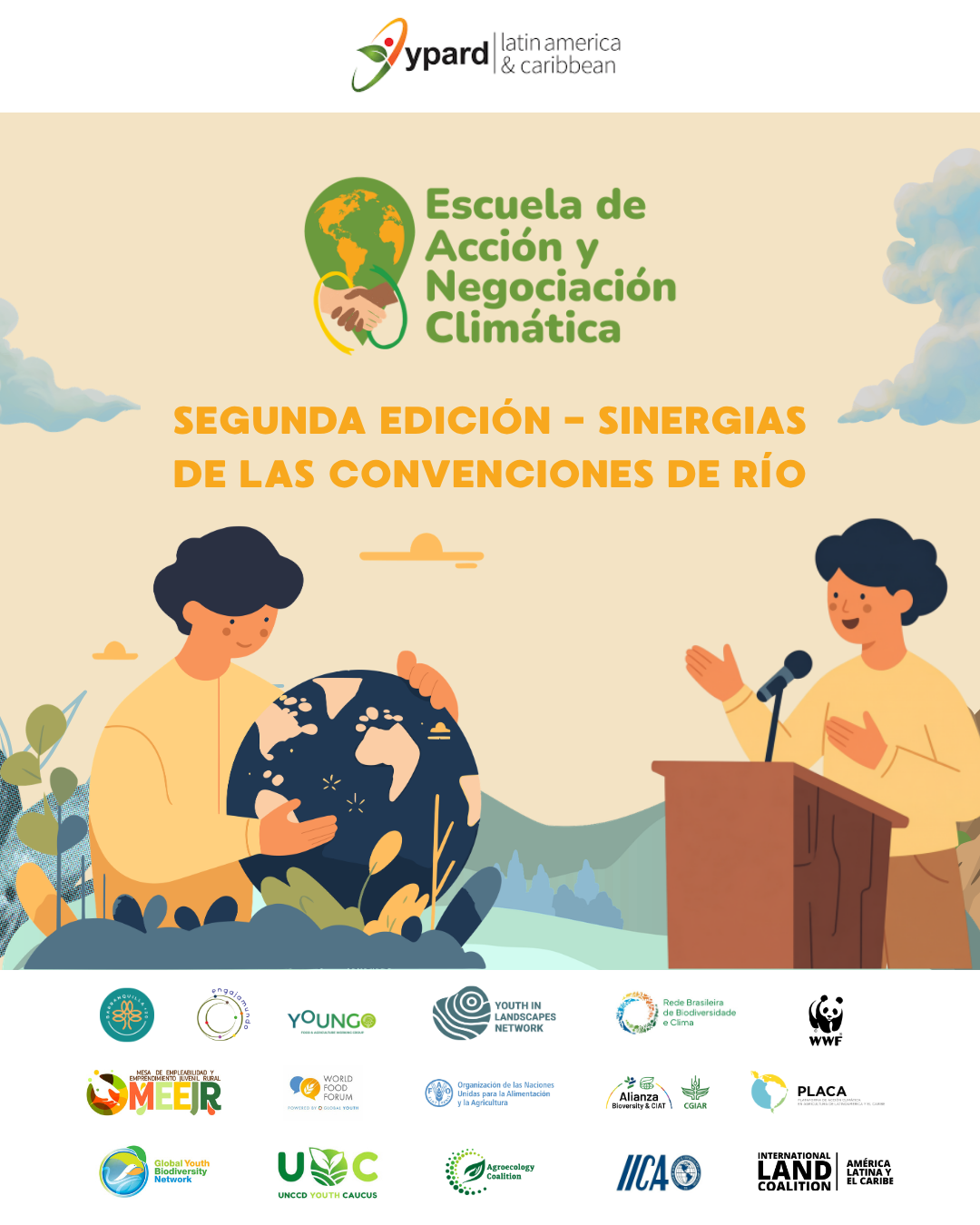
Frente a este desafío, YPARD yorganizaciones juveniles y aliadas de América Latina y el Caribe anuncian laconvocatoria a la Escuela de Acción y Negociación para Juventudes: Sinergias delas Convenciones de Río, un espacio de formación e intercambio que buscafortalecer el liderazgo y las capacidades de jóvenes para comprender,participar e incidir en los procesos vinculados a las tres Convenciones de Río.
“Las Convenciones de Río —la ConvenciónMarco de las Naciones Unidas sobre el Cambio Climático (CMNUCC), la Convenciónsobre la Diversidad Biológica (CDB) y la Convención de las Naciones Unidas deLucha contra la Desertificación (CNULD)— abordan desafíos estrechamenterelacionados: el cambio climático, la pérdida de biodiversidad y la degradaciónde los suelos. Comprender sus conexiones es especialmente importante para lasjuventudes rurales, cuyos territorios se encuentran en primera línea frente aestos desafíos y que, al mismo tiempo, desarrollan soluciones desde suscomunidades”, explica Sebastián Pedraza, Coordinador para Latinoamérica y elCaribe de YPARD.
La Escuela es impulsada por YPARD enarticulación con diversas organizaciones, redes y colectivos juveniles deAmérica Latina y el Caribe, así como con organizaciones internacionales yactores de cooperación. Entre las organizaciones aliadas se encuentranBarranquilla+20, YOUNGO, Global Youth Biodiversity Network (GYBN), UNCCD YouthCaucus, la Coalición Latinoamericana de Juventudes por el Desarrollo Rural, laMesa de Empleabilidad y Emprendimiento Juvenil Rural (MEEJR), Engajamundo, laRed Brasilera de Biodiversidad y Clima, Guardianes por la Vida, Youth inLandscapes/GLF y World Food Forum. La iniciativa cuenta además con elacompañamiento de IICA, FAO, PLACA, la Alianza Biodiversity and CIAT,International Land Coalition, la Coalición de Agroecología y WWF, entre otrosactores comprometidos con el fortalecimiento del liderazgo juvenil y latransformación de los sistemas agroalimentarios.
La Escuela tendrá una duración de tresmeses y se desarrollará principalmente de manera virtual, combinando sesionesformativas, intercambios de experiencias y espacios de articulación.
A lo largo del programa, las y losparticipantes podrán profundizar en temas como:
● Crisis climática y acciónclimática.
● Conservación de la biodiversidad ylucha contra la desertificación.
● Sistemas agroalimentariossostenibles y agroecología.
● Transición justa, justicia socialy equidad de género.
● Derechos sobre la tierra ydesafíos territoriales.
● Negociación internacional ydiplomacia.
● Incidencia, comunicación yactivismo digital.
La metodología combinará contenidosteóricos con casos prácticos, diálogo intergeneracional y experienciascompartidas por jóvenes, especialistas y actores vinculados a las Convencionesde Río.
Uno de los espacios destacados será unasesión de intercambio con negociadores y representantes de gobiernos, quepermitirá acercar a las juventudes rurales a los procesos de negociacióninternacional relacionados con la agricultura y la acción climática.
Como parte de este proceso, lasjuventudes participantes contribuirán a la construcción de un documentoregional de prioridades políticas de las juventudes, que recogerá susperspectivas frente a las sinergias entre las Convenciones de Río y,particularmente, frente a las negociaciones relacionadas con los sistemasalimentarios y la agricultura.
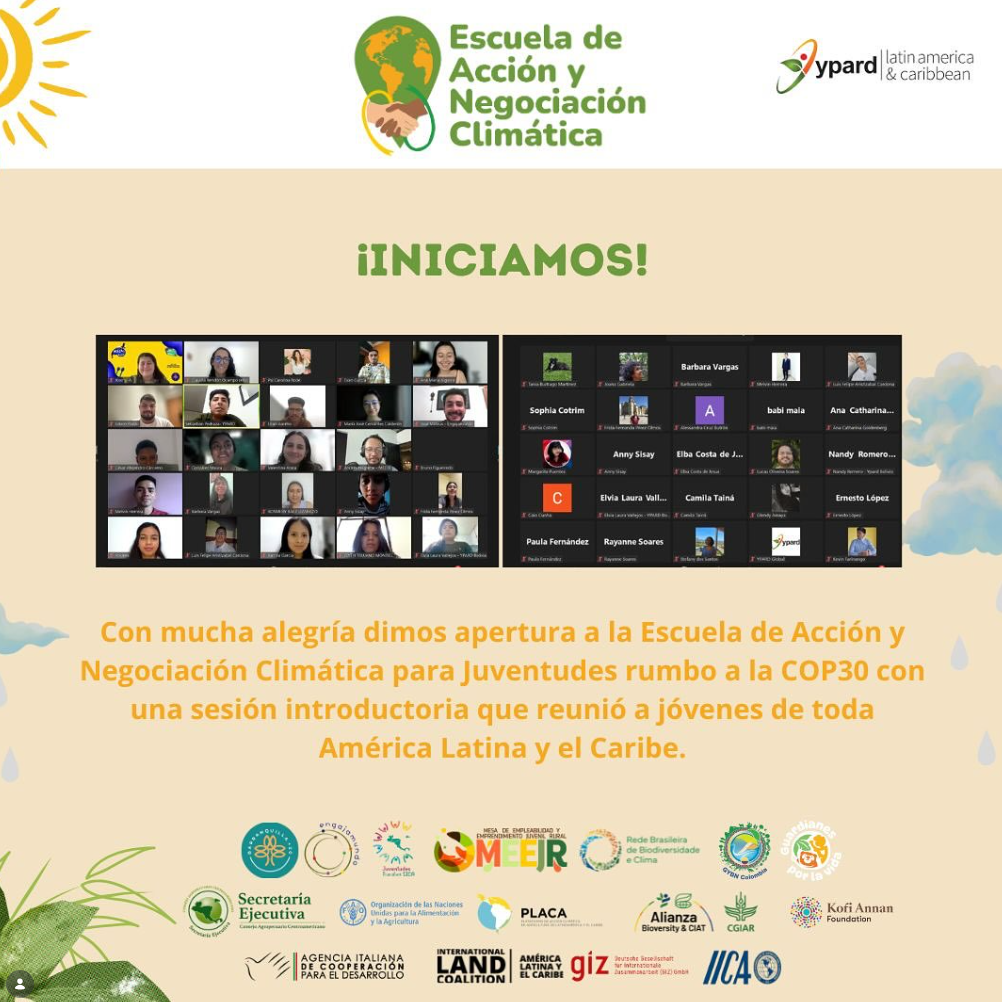
También se promoverá la articulación paraparticipar en side events y otros espacios de incidencia durante las cumbresinternacionales de 2026, llevando las voces y propuestas de las juventudesrurales de América Latina y el Caribe a escenarios globales. Esta iniciativa da continuidad al trabajodesarrollado en 2025 a través de la Escuela de Acción y Negociación Climáticapara Juventudes Rurales camino a la COP30, que alcanzó a más de 200 jóvenesrurales de América Latina y el Caribe y fortaleció la articulación entreorganizaciones juveniles de la región.
Convocatoria abierta: 4 al 13 deseptiembre de 2026
Modalidad: virtual, con espacios de articulación e intercambio
Edad: 14 a 35 años
Duración de la Escuela: 3 meses
Postula, conecta con otras juventudes dela región y fortalece tu capacidad para transformar conocimiento en acción eincidencia.
Las personas seleccionadas deberán contarcon disponibilidad de tiempo y compromiso para participar activamente duranteel desarrollo de la Escuela.
--
English version
September 2026. The initiative will bring together young people from Latin America and the Caribbean to strengthen their capacities in climate action, biodiversity, the fight against desertification, and international negotiation ahead of the 2026 environmental summits.
Rural youth are leading initiatives that contribute to building more sustainable agrifood systems, protecting biodiversity, and responding to the impacts of the climate crisis. However, many of these experiences still have limited representation in the national and international forums where policies and commitments affecting their territories are discussed.
In response to this challenge, YPARD—alongside youth organizations and allies from Latin America and the Caribbean—is announcing a call for applications for the "Youth Action and Negotiation School: Rio Conventions Synergies." This training and exchange space aims to strengthen youth leadership and capacity to understand, participate in, and influence processes linked to the three Rio Conventions.
"The Rio Conventions—the UN Framework Convention on Climate Change (UNFCCC), the Convention on Biological Diversity (CBD), and the UN Convention to Combat Desertification (UNCCD)—address closely interrelated challenges: climate change, biodiversity loss, and land degradation. Understanding the connections between them is especially important for rural youth, whose territories are on the front lines of these challenges and who, at the same time, are developing solutions from within their communities," explains Sebastián Pedraza, YPARD Coordinator for Latin America and the Caribbean.
The School is driven by YPARD in collaboration with various youth organizations, networks, and collectives from Latin America and the Caribbean, as well as international organizations and cooperation partners. Partner organizations include Barranquilla+20, YOUNGO, the Global Youth Biodiversity Network (GYBN), the UNCCD Youth Caucus, the Latin American Youth Coalition for Rural Development, the Rural Youth Employability and Entrepreneurship Roundtable (MEEJR), Engajamundo, the Brazilian Biodiversity and Climate Network, Guardianes por la Vida, Youth in Landscapes/GLF, and the World Food Forum. The initiative is also supported by IICA, FAO, PLACA, the Alliance of Bioversity and CIAT, the International Land Coalition, the Agroecology Coalition, and WWF, among other stakeholders committed to strengthening youth leadership and transforming agrifood systems.
The School will run for three months and take place primarily online, combining training sessions, experience exchanges, and spaces for collaboration.
Throughout the program, participants will delve into topics such as:
● Climate crisis and climate action.
● Biodiversity conservation and combating desertification.
● Sustainable agrifood systems and agroecology.
● Just transition, social justice, and gender equity.
● Land rights and territorial challenges.
● International negotiation and diplomacy.
● Advocacy, communication, and digital activism.
The methodology will combine theoretical content with case studies, intergenerational dialogue, and experiences shared by young people, specialists, and stakeholders linked to the Rio Conventions.
A key feature will be an exchange session with negotiators and government representatives, designed to bring rural youth closer to international negotiation processes related to agriculture and climate action.
As part of this process, participating youth will contribute to drafting a regional document outlining youth policy priorities. This document will capture their perspectives on the synergies between the Rio Conventions and, specifically, on negotiations regarding food systems and agriculture.
Efforts will also be made to coordinate participation in side events and other advocacy forums during the 2026 international summits, bringing the voices and proposals of rural youth from Latin America and the Caribbean to the global stage. This initiative builds upon the work carried out in 2025 through the "Climate Action and Negotiation School for Rural Youth" leading up to COP30—a program that reached over 200 rural young people across Latin America and the Caribbean and strengthened collaboration among youth organizations in the region.
Call for applications: September 4–13, 2026
Format: Virtual, with opportunities for collaboration and exchange
Age: 14 to 35 years old
Program duration: 3 months
Apply, connect with other young people from the region, and strengthen your ability to turn knowledge into action and advocacy.
Selected participants must be available and committed to actively participating throughout the program.